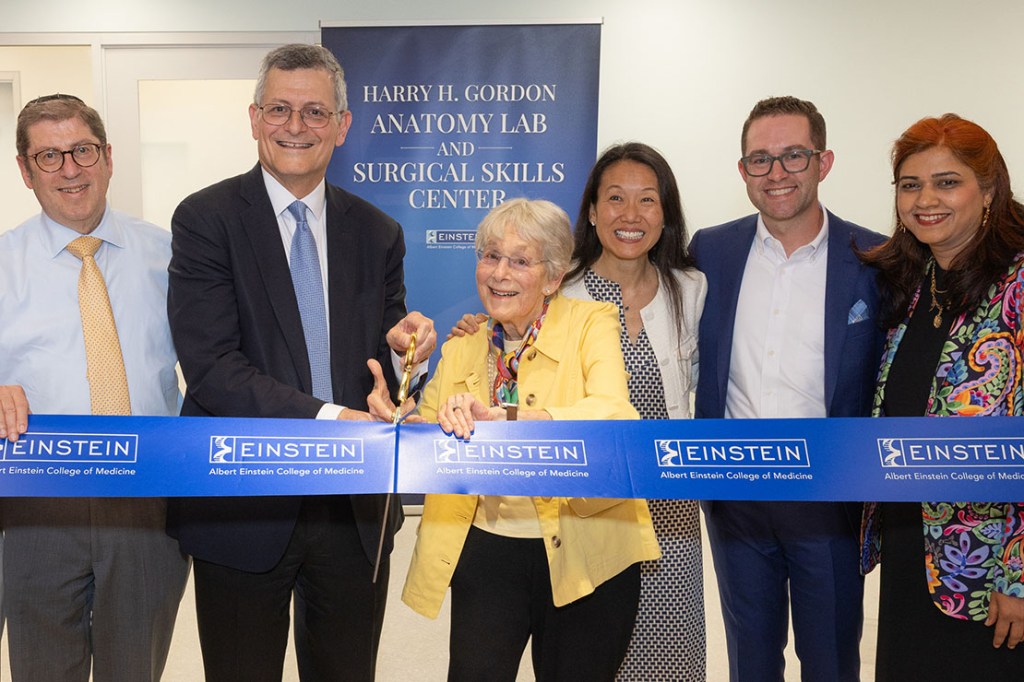
Thanks to a $17 million gift from an anonymous donor, Einstein’s first-year medical students will now explore the intricacies of the human body using state-of-the art tools and resources. The Harry H. Gordon Anatomy Lab and Surgical Skills Center, named for Einstein’s second dean, opened in August on the first floor of the Van Etten Building. At more than 10,000 square feet, the new facility is nearly double the size of the lab it replaces. Highlights of the new center include:
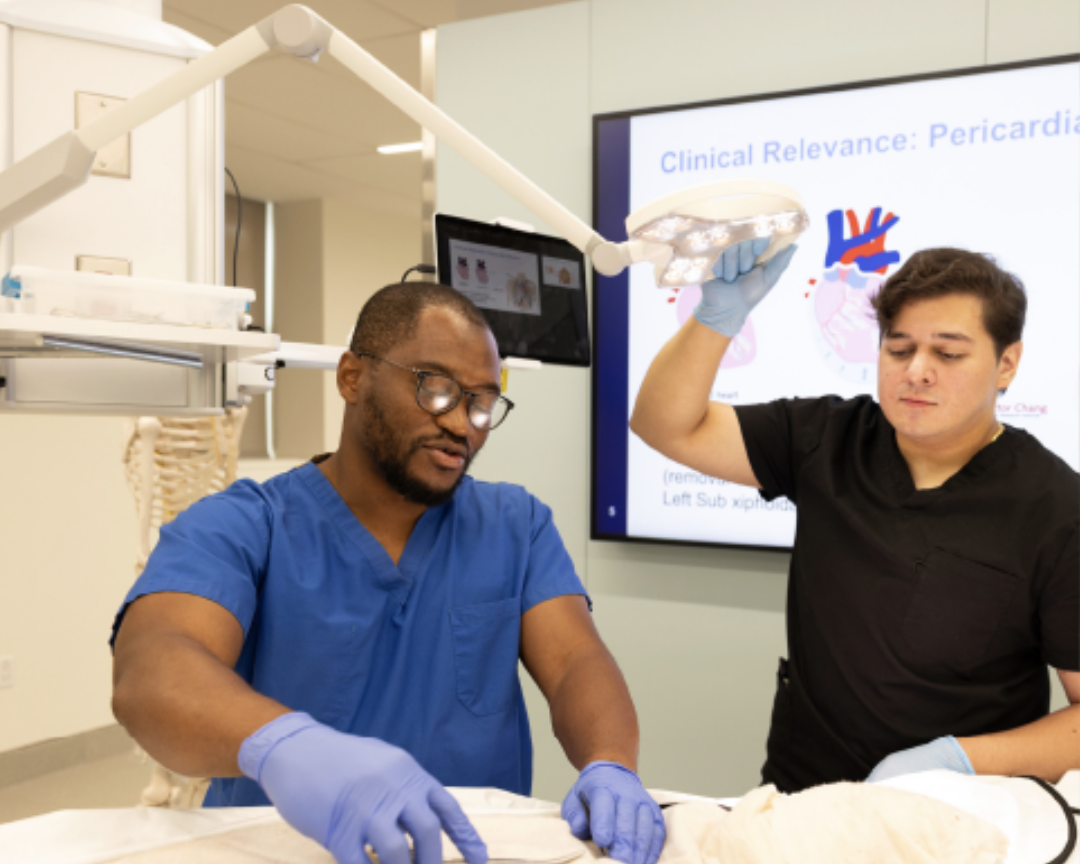
A flexible boom allows for lighting to be adjusted for better visibility of intricate anatomy
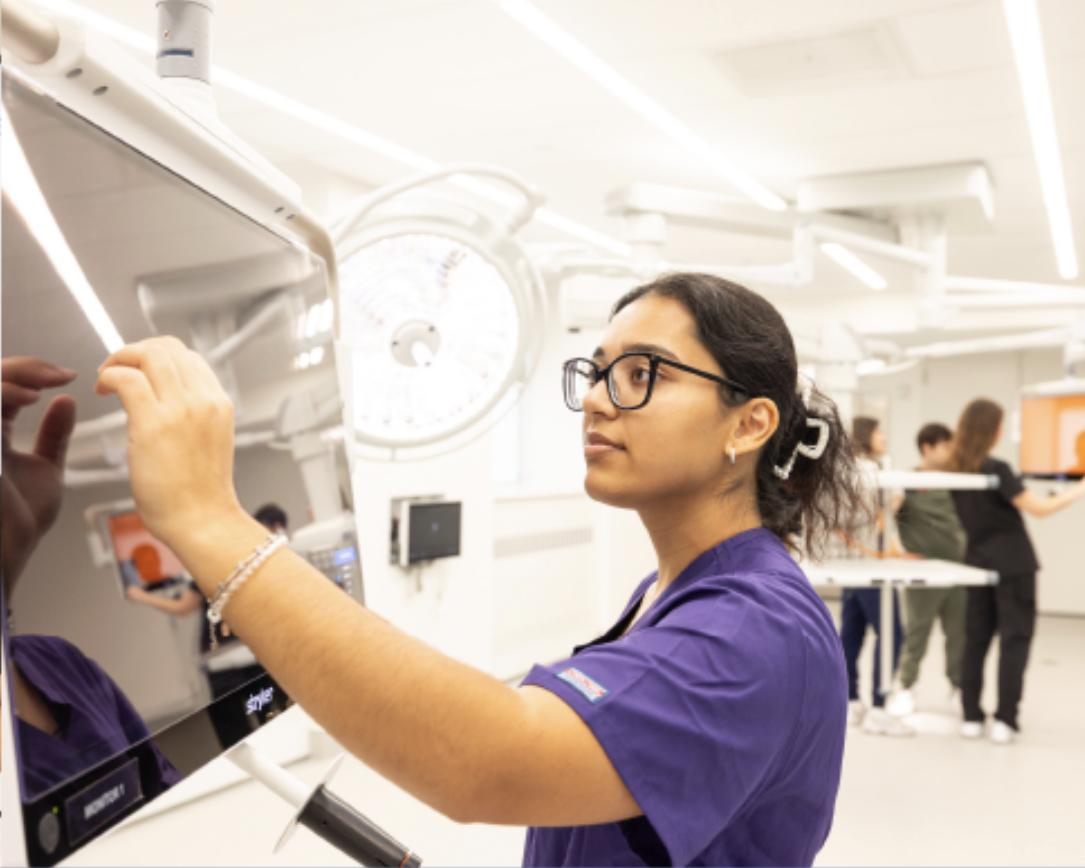
A ceiling-mounted tablet enhances the ability to view parts of the human body in greater detail
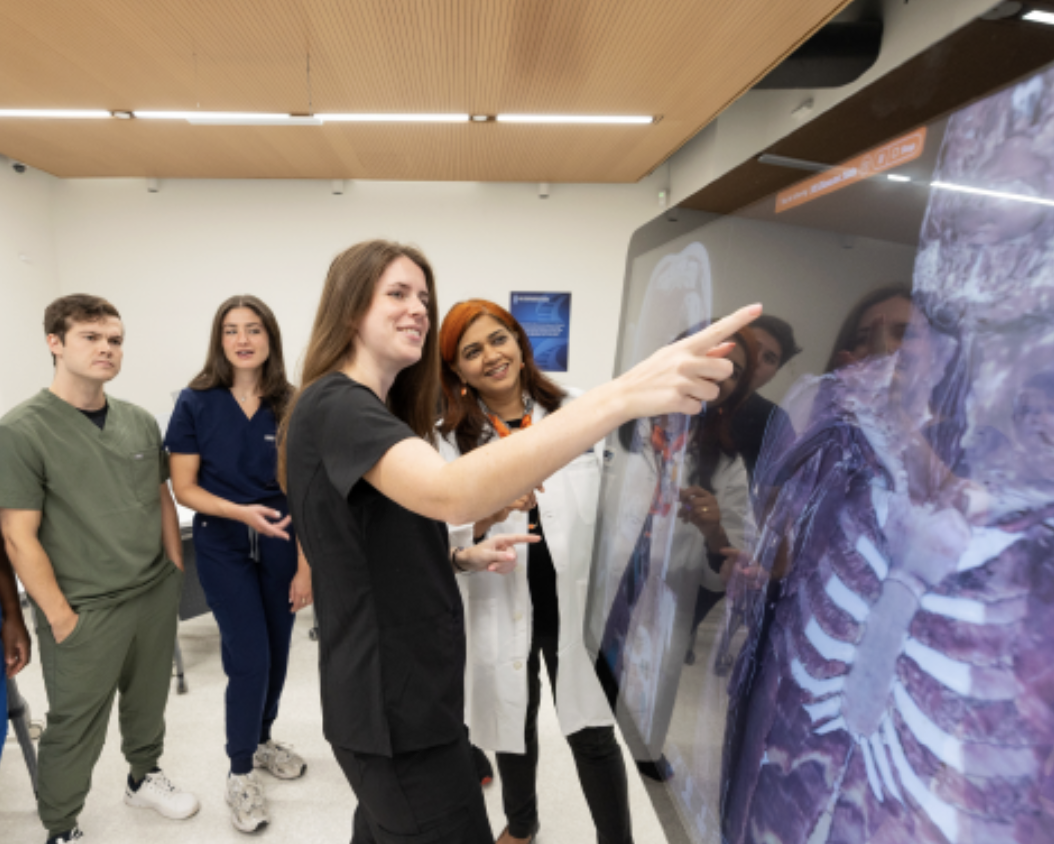
A 75-inch flat-screen computer monitor improves the learning experience at each workstation
“Anatomy is the key foundational course in our students’ medical education,” says Yaron Tomer, M.D., the Marilyn and Stanley M. Katz Dean at Einstein and chief academic officer at Montefiore Einstein. “It is vital for acquiring the clinical skills and knowledge necessary for compassionate and exceptional patient care. We are extremely grateful to the anonymous donor, whose generosity made this dream a reality. This support will have a lasting impact on our students’ education and future careers.”
The new lab is “an incredibly innovative and collaborative learning environment that integrates advanced technology with hands-on learning,” says Yoon Kang, M.D., vice dean for education at Einstein and the Ruth L. Gottesman Chair in Education. “What the students experience here will mirror what they can expect in clinical practice.”
Priti Mishall, M.D., professor of pathology and of ophthalmology & visual sciences at Einstein, has been the course director for Clinical and Developmental Anatomy since 2021. Students attend lectures and learn about the makeup of the human body using carefully dissected cadavers in the anatomy labs.
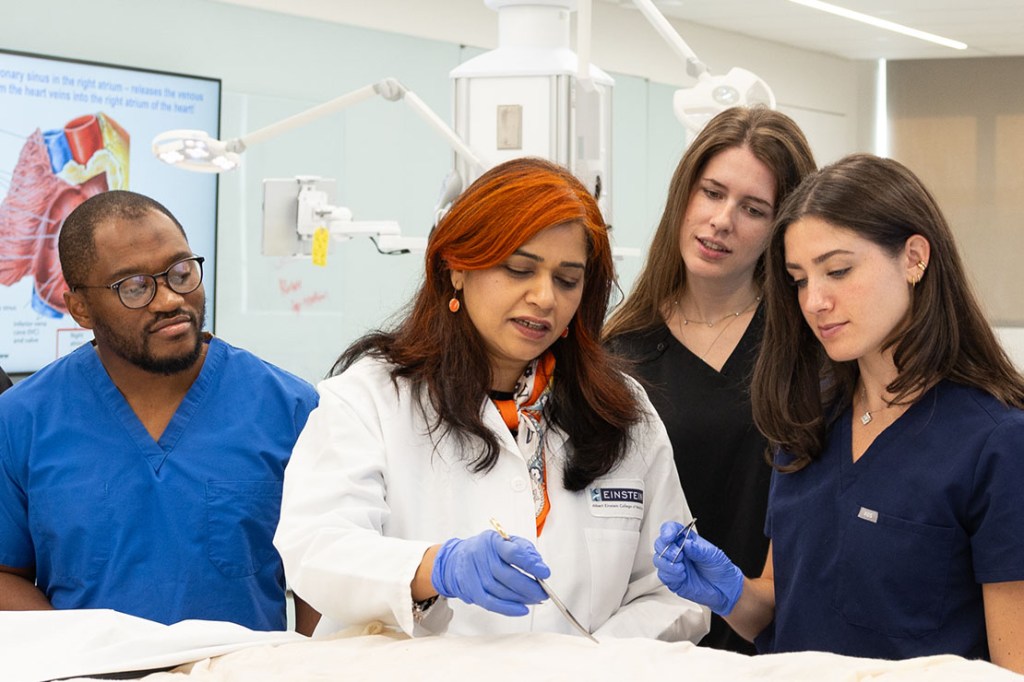
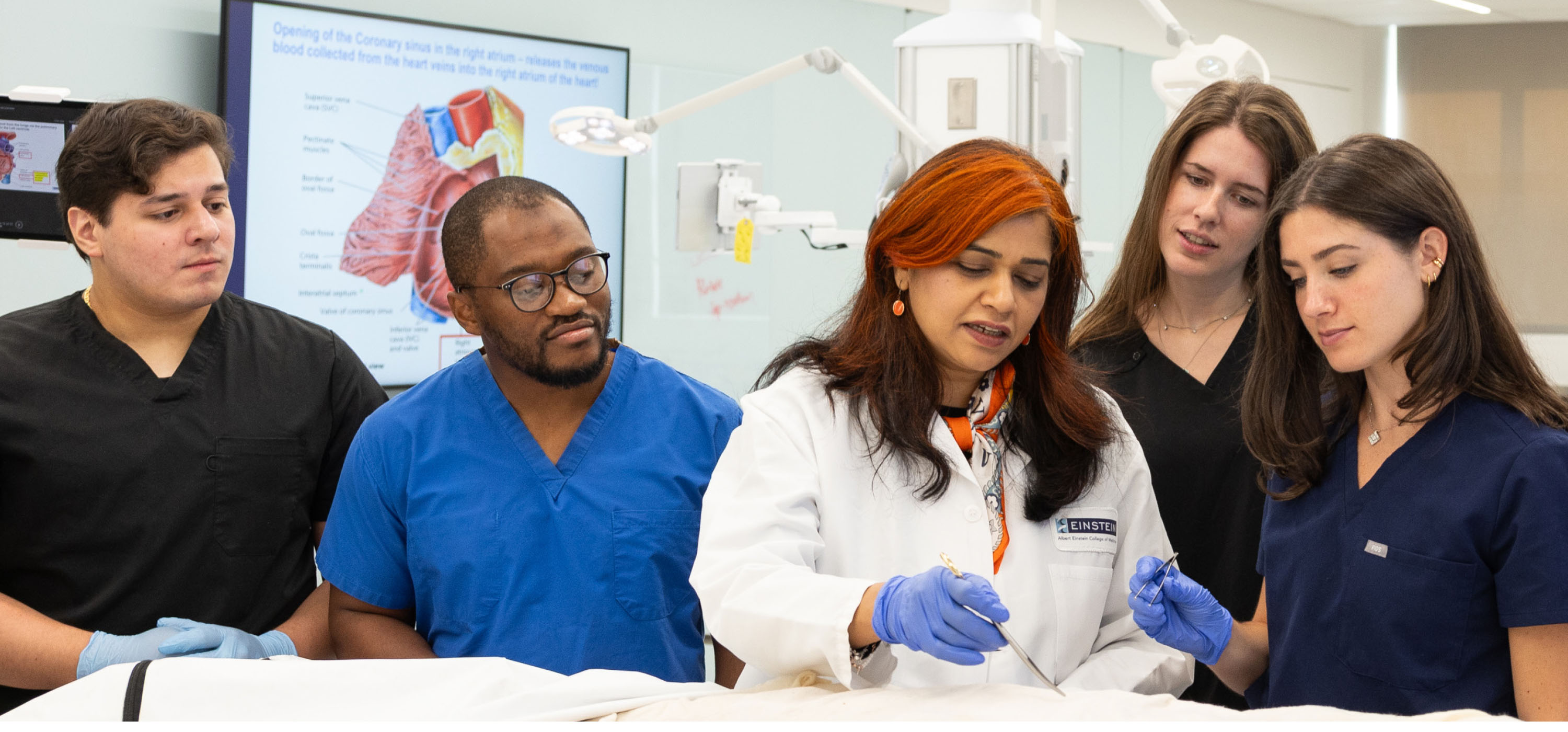
She says that the audiovisual upgrades have taken Einstein’s anatomy program to the next level. “We now have 75-inch flat-screen computer monitors at each of our nine workstations,” she notes. “These state-of-the-art dissection stations with ceiling-mounted tablets and cameras allow for close-up viewing of intricate anatomy. For example, the eyeball contains thin nerves that travel to it from the brain. These thin nerves were previously very difficult to demonstrate to a group of seven to eight students. In the new labs, the tablet and camera allow for real-time projection of the structures on the giant wall monitors and enhance our ability to explain the anatomy in detail.”
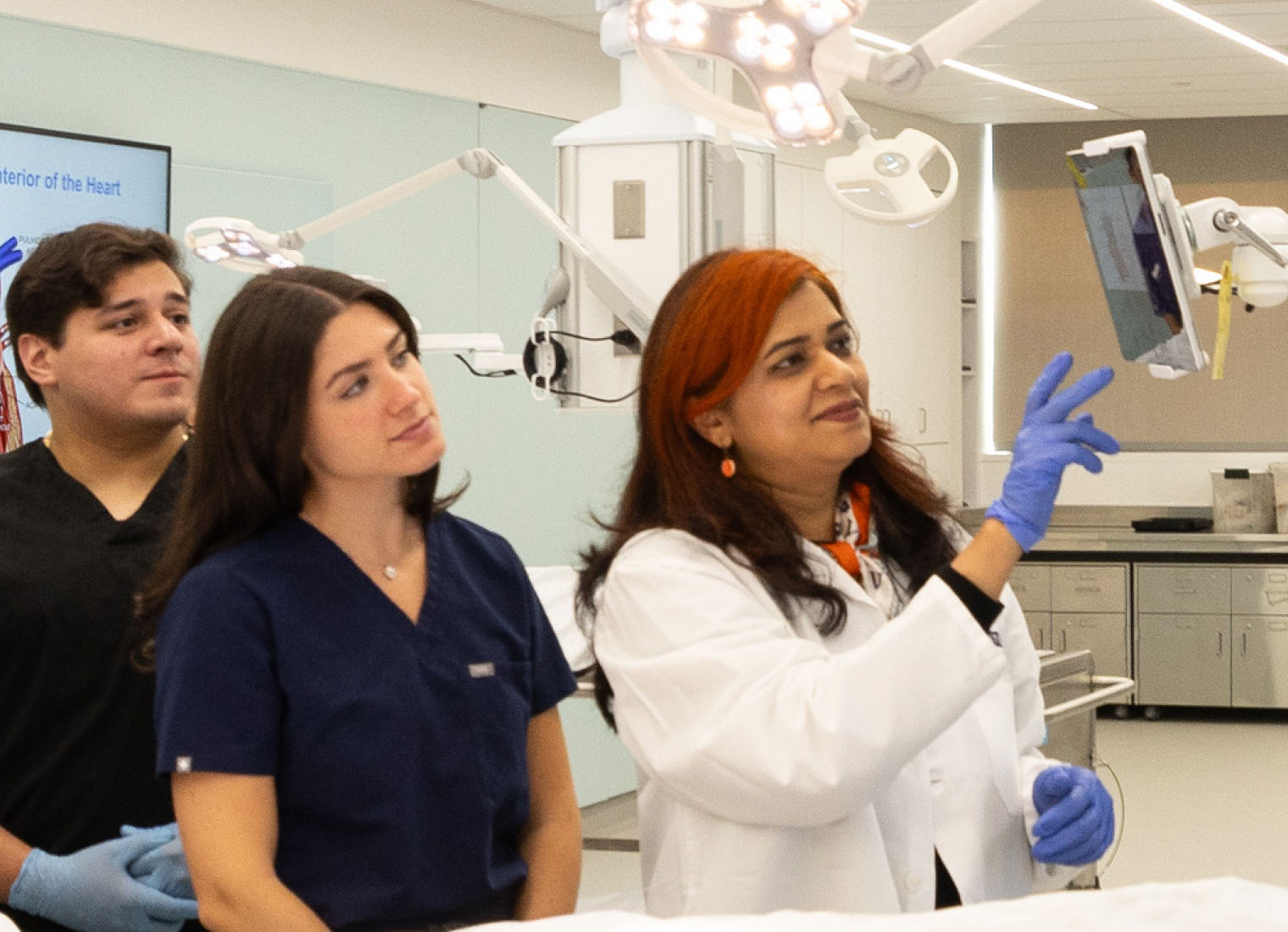 Dr. Mishall, professor of pathology and of ophthalmology and visual sciences at Einstein, at right, zeroes in on a part of the human anatomy using a tablet above a workstation.
The design of the new space enables small groups of students to move among adjacent tables for in-depth lessons on a specific part of the anatomy, Dr. Mishall says. A lesson on the thoracic wall and lungs, for example, is now taught using three dissection stations — one to examine muscles, one for bones, and one for organs. “The instructors can now implement many active learning techniques to engage students by asking them to point out the structures or discuss clinical correlates. It makes teaching more effective,” she adds.
Plans to replace the decades-old anatomy lab on the sixth floor of the Forchheimer Medical Science Building began in 2022, says Joseph Ben-Ari, director of design and construction at Einstein. That’s when Einstein experts in medical education, engineering, and technology started brainstorming, making multiple site visits to other anatomy labs in the area. “A lot of research went into this,” he says. With philanthropic support, the vacated space in Forchheimer will also be designed and repurposed to support Einstein’s educational and scientific missions.
Looking to the future, a simulated operating room with two surgical tables was constructed alongside the anatomy lab, creating an opportunity for students, trainees, and even practicing physicians to use the space to develop surgical skills, Mr. Ben-Ari says.
“This remarkable new lab demonstrates the College of Medicine’s commitment to excellence in medical education.” Dean Tomer says. “The myriad possibilities for its use as a learning space will serve Einstein for years to come.”