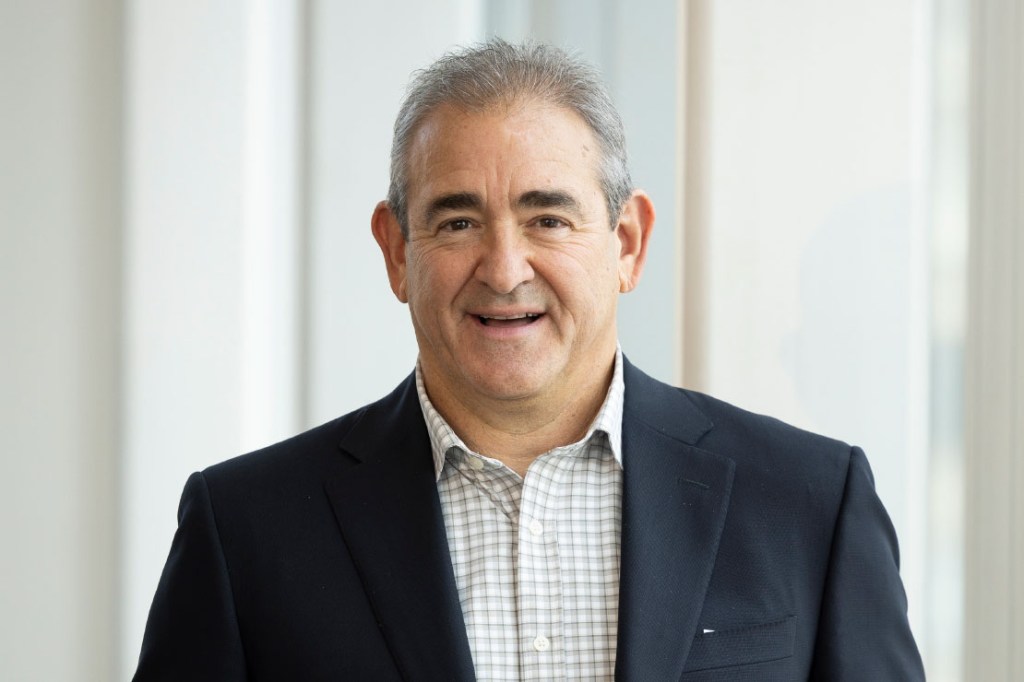
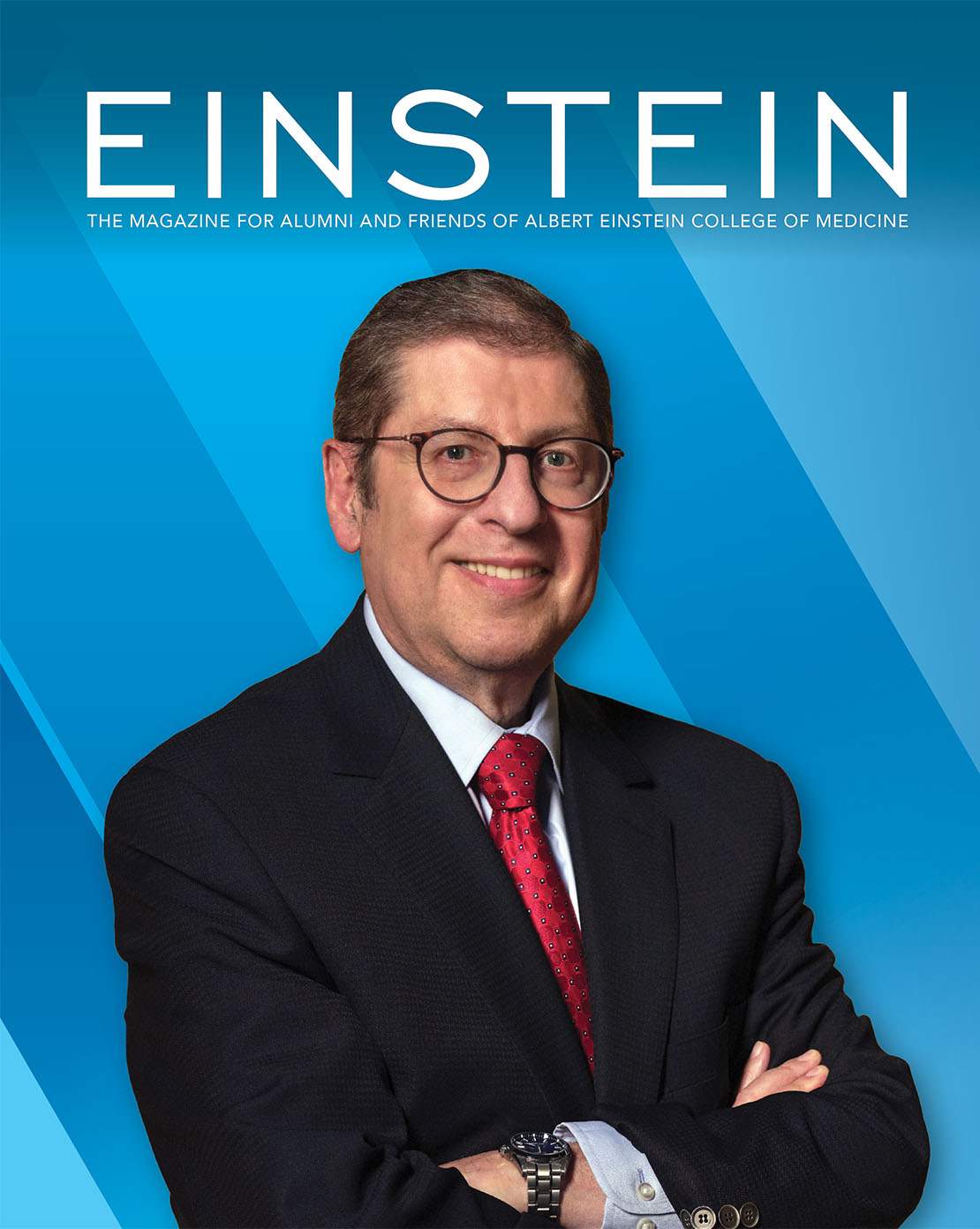
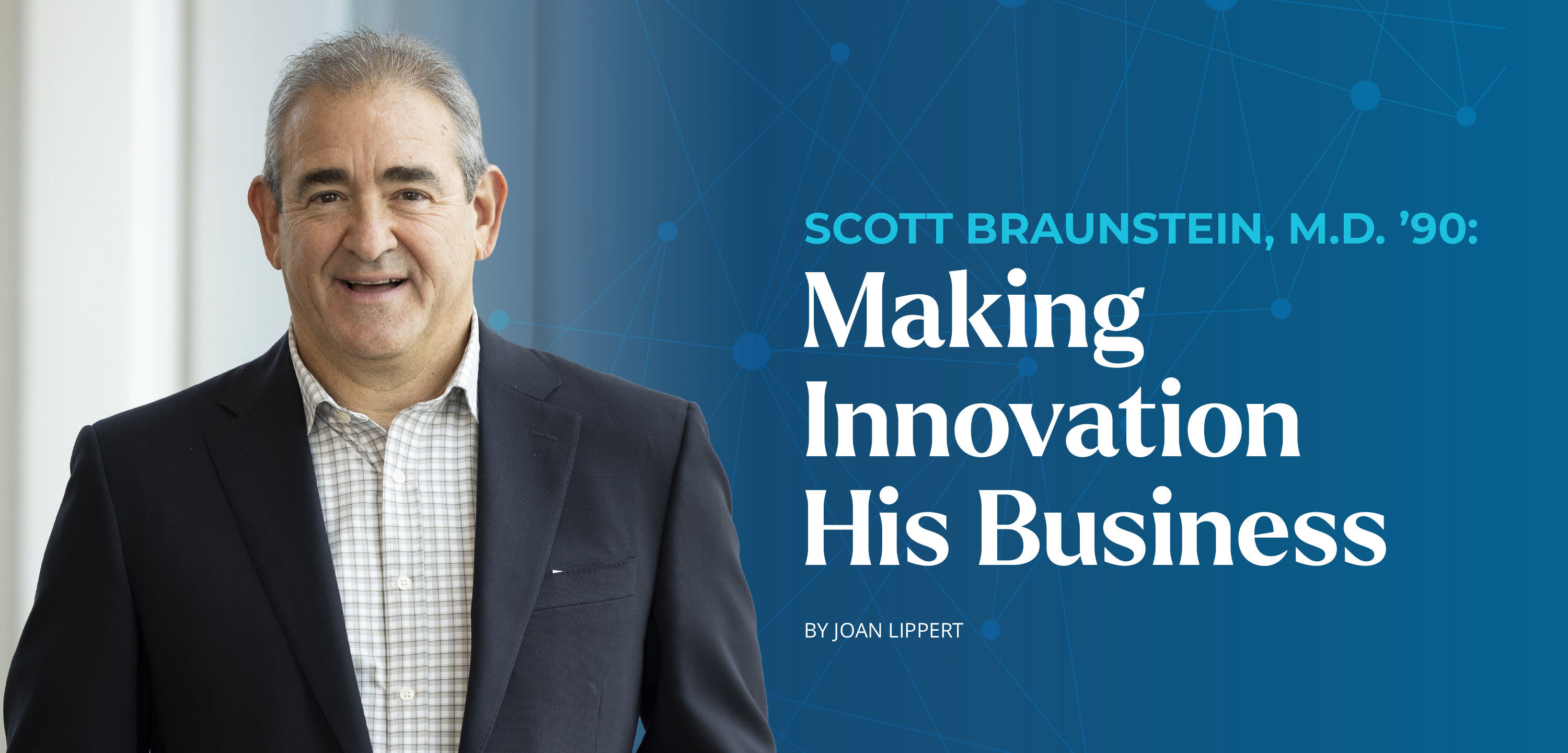
It’s not a long drive from Morris Park Avenue to Wall Street, but not many graduates of Albert Einstein College of Medicine go that route. A notable exception is Scott N. Braunstein, M.D. ’90. Growing up in the Bronx, “I was a science kid,” he says. “My grandfather was a physician. In high school I volunteered with the local ambulance corps.” At Cornell University, he majored in biology. When considering medical schools, he says that “Einstein students were really happy, and the program was very hands-on, with great leadership.”
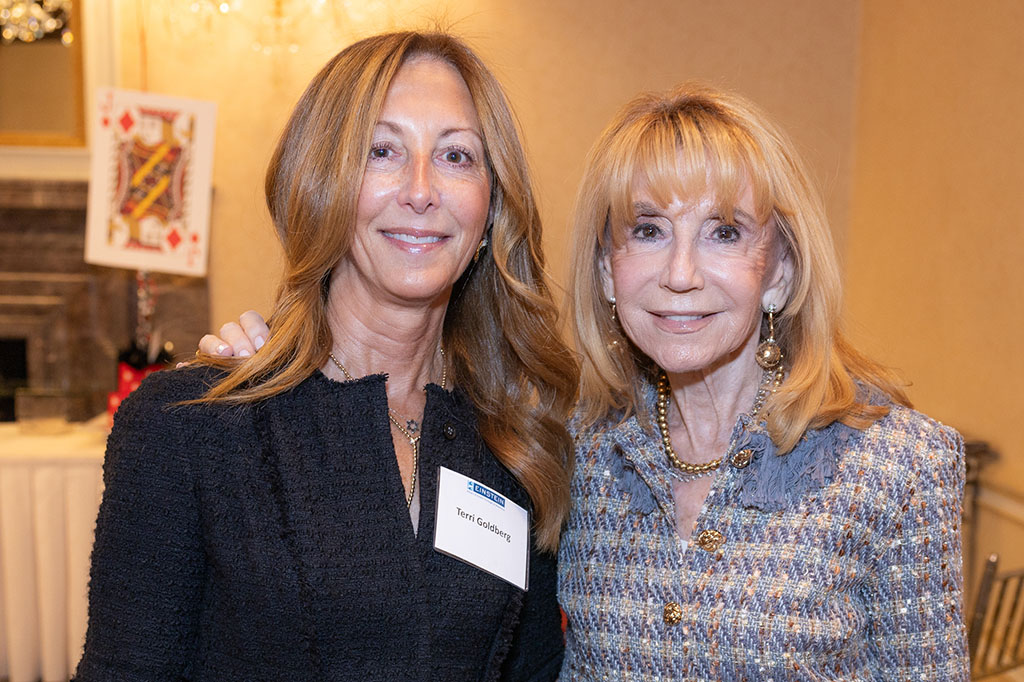
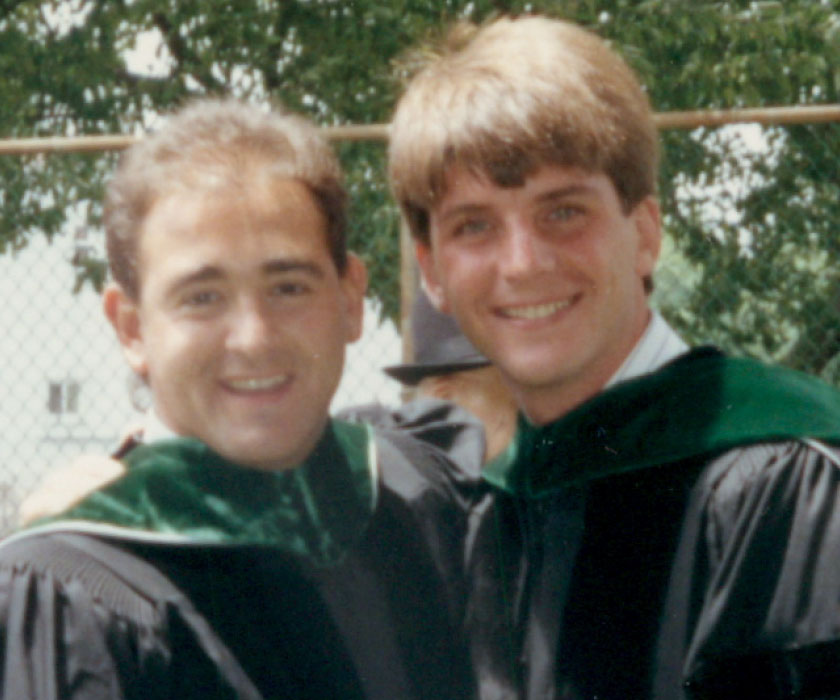 Dr. Braunstein, left, with a classmate at his graduation from Einstein.
I came to appreciate the value of providing care for patients who didn’t have a lot of resources.
—Dr. Scott Braunstein
After graduating, Dr. Braunstein completed his training in internal medicine at NewYork-Presbyterian Hospital and taught at Einstein and Columbia University Medical Center. He joined Summit Medical Group of New Jersey, a large multispecialty practice, in 1994.

“In the beginning, I never considered straying from the path,” says Dr. Braunstein. “At Summit, I worked at two Columbia-affiliated hospitals and lectured my residents regularly on a range of topics—the right treatment for pneumonia or urinary tract infection, the right prostate-cancer screening process, and the like,” he explains.
He says he enjoyed spending hours working on updating a lecture to include the latest research, a skill born at Einstein: “As a third- and fourth-year medical student, I had done HIV research in the epidemiology department. I also spent time at Jacobi Hospital and came to appreciate the value of providing care for patients who didn’t have a lot of resources,” he says.
He recalls two “incredibly compassionate role models” in the department of medicine: Kathleen Ward, an assistant professor of medicine at Einstein, and Bert Bell, M.D., a distinguished professor emeritus of medicine at Einstein who died in 2016. “Dr. Ward was passionate about her patients, and Dr. Bell felt that talking to patients and understanding their stories were critical to being a physician, more than just collecting their data.”
I was looking at all the data, talking to the experts in the field, and coming up with a financial conclusion on how relevant and competitive a new therapeutic-drug product category would be.
—Dr. Scott Braunstein
More often than not, Dr. Braunstein’s lectures to residents recommended certain treatments for certain diseases. He started to do more lecturing on therapeutics and saw, for the first time, the business side of medicine. “And I enjoyed it as much as the practice of medicine,” he says.
In a turning point for his career, Dr. Braunstein decided to leave Summit in 2000 to become a healthcare consultant at a New Jersey firm. “Pharmaceutical companies were always looking to expand or contract their business, and they would often use third-party consultants to help them understand whether they were making the right or the wrong decision,” Dr. Braunstein says.
The work paralleled his lecturing, except that instead of making a physician recommendation, “I was doing a financial analysis of a business by looking at all the data, talking to the experts in the field, and coming up with a financial conclusion on how relevant and competitive a new therapeutic-drug product category would be,” he says.

Dr. Braunstein was then recruited by Wall Street’s Deutsche Bank, where he was one of seven analysts in healthcare specialty sales. Banks often have investment divisions; in simpler terms, Dr. Braunstein was the seller and bank customers were the buyers. After gathering written and word-of-mouth information about the outlook of a company, he would meet with clients to make recommendations on buying equities.
Some clients were large ones, among them J.P. Morgan; when contacts there saw his skill set, they invited him to come on board as a pharmaceutical, biotech, and medical device analyst. “I spent much of my time at J.P. Morgan attending medical meetings to understand what the newest therapies would be and how they would affect clinical practice,” he says. He progressed from making recommendations on small-cap pharmacy stocks to large-cap medical-device, pharmaceutical, and biotech stocks.
Smarter scientists than I am can create a pathway or drug from scratch and pursue understanding of a disease state. But my strongest skill set is to look at early clinical data and help companies make them into a real compound for patients.
—Dr. Scott Braunstein
He became the “encyclopedia” within asset management for J.P. Morgan’s healthcare investments. Before leaving J.P. Morgan in 2015, he took over management of a fund of $25 million in assets that had previously been performing poorly; its value skyrocketed to $4 billion. “I also had the No. 1 performing global healthcare fund in the world three years running,” he says. “Those were some of my proudest years.”
Dr. Braunstein has continued to move medicine forward by joining the other side of the pharma and biotech businesses. His current venture is as a board member of RAPT Therapeutics, a company that focuses on treating immunologic and inflammatory conditions, among them life-threatening food allergies. “RAPT was inexperienced in the food allergy space, and I gave advice to the scientific and regulatory teams,” he says. “We raised a lot of capital to support global phase 3 trials.” A vote of confidence came from pharmaceutical giant GlaxoSmithKline (GSK), which in early 2026 acquired RAPT. “GSK will be able to quickly expand the program,” he says.
In addition, Dr. Braunstein chairs the board of Ray Therapeutics, which researches gene therapy and is showing success in treating vision-robbing retinitis pigmentosa, a condition in which light-sensitive cells in the eye break down. Research is also underway in patients with a related degenerative retinal disease. “I helped contribute to accelerating the development of the company’s geographic atrophy clinical program, and it will start this summer,” he says.
Dr. Braunstein finds time to serve on a number of other pharmaceutical company boards, among them AtaiBeckley (mental health), Caribou Biosciences (hematologic malignancies), Aegle Therapeutics (dermatologic disorders), and One Biosciences (tissue samples). “Smarter scientists than I am can create a pathway or drug from scratch and pursue understanding of a disease state. But my strongest skill set is to look at early clinical data and help companies make them into a real compound for patients,” he says.
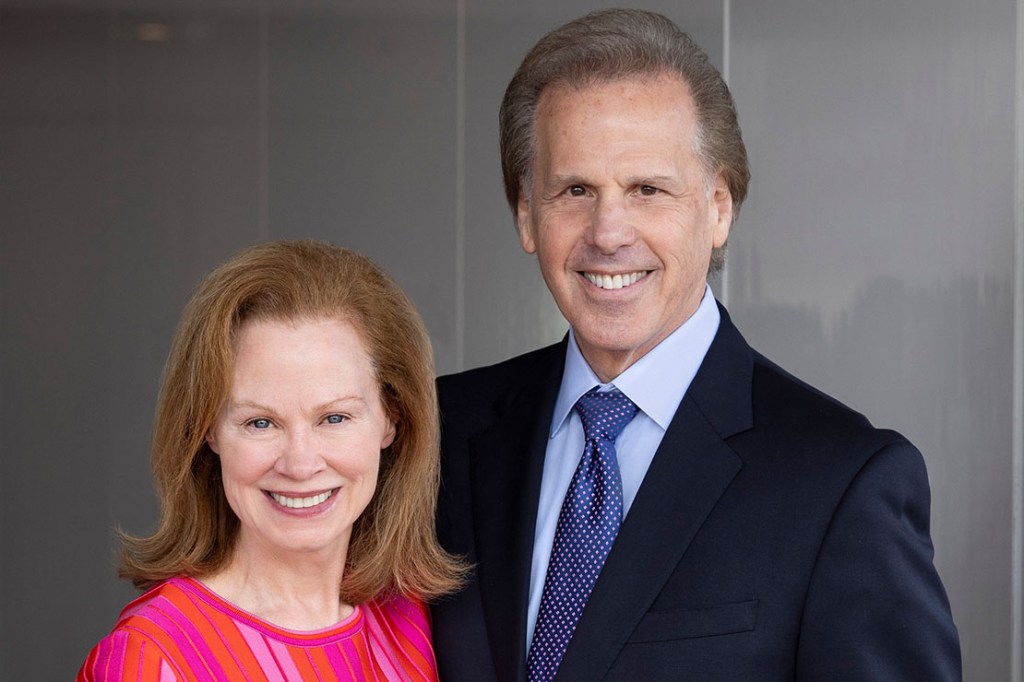
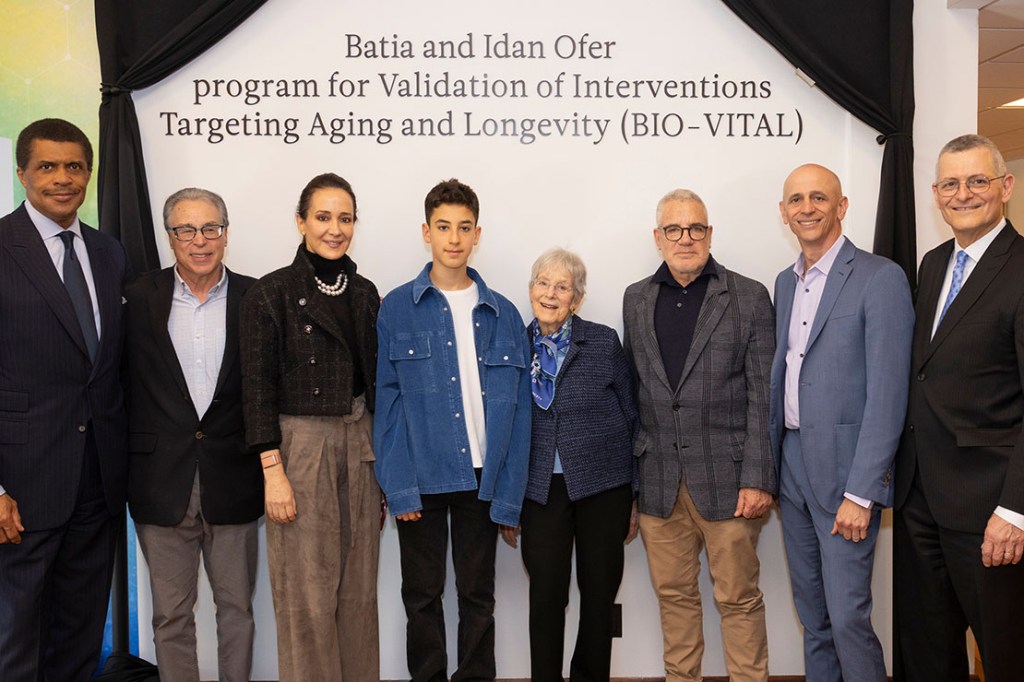
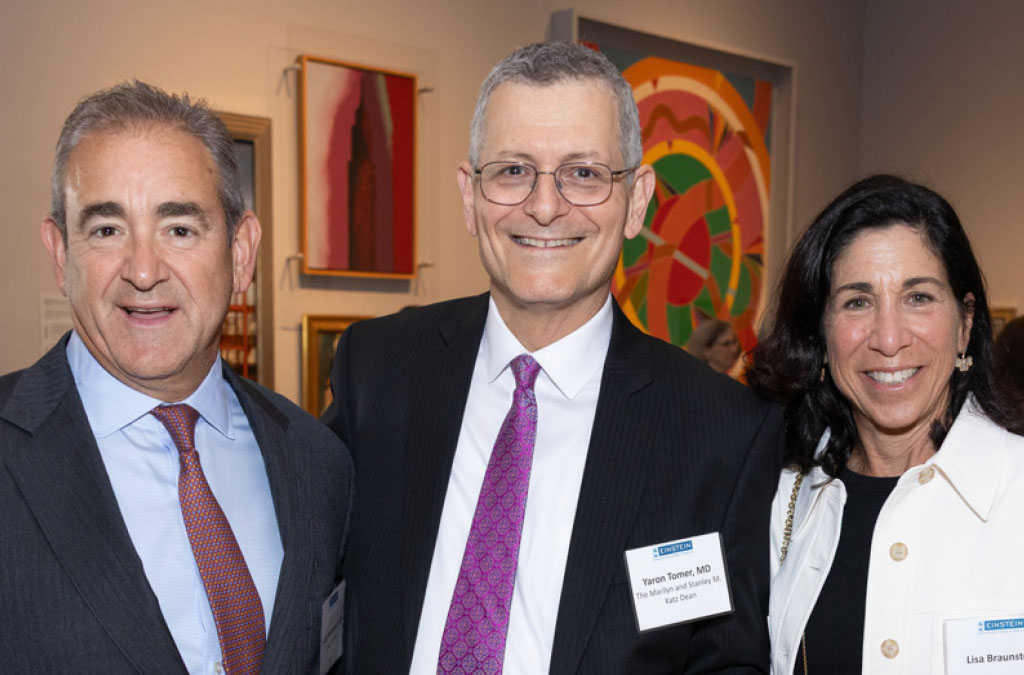 From left, Dr. Braunstein, Yaron Tomer, M.D., the Marilyn and Stanley M. Katz Dean, and Lisa Braunstein.
“It’s great when patients win, when shareholders win, when employees win, when everyone wins,” says Dr. Braunstein of his life’s work. “But I’m just as proud of having taught young, inexperienced, but very bright individuals how to be leaders in an organization. I spend five to 10 hours a week mentoring physicians and physician-scientists in the biotech industry who are looking to be entrepreneurial.”
His support extends to Einstein students. “Last year I did mock interviews with Einstein students for medical school residencies,” he says. And though tuition is free, he recognizes that students must pay for room and board, educational materials, and more. “That’s what led my wife and me to create the Lisa and Scott N. Braunstein, M.D. ’90, Endowed Scholarship,” he says. “We think that helping students know that they can start their careers a little less in debt will encourage smart and dedicated folks to go into the field.” Dr. and Mrs. Braunstein also support the ECHO Clinic, Einstein’s free student-run medical service for patients in the Bronx.
In June 2026, Dr. Braunstein will visit Einstein’s campus for the first time in decades. “I’ve offered my services to help the scientific community think with a bit more business savvy about what they’re working on in the lab,” he says. “I’ve also been doing advisory work with startup companies created through Einstein to help them progress through clinical trials. And the Einstein Innovation Group, a student group focused on innovation and entrepreneurship, has invited me to speak at one of their upcoming events. All this has brought me back into the Einstein fold,” he says. “And I couldn’t be happier about the opportunity.”