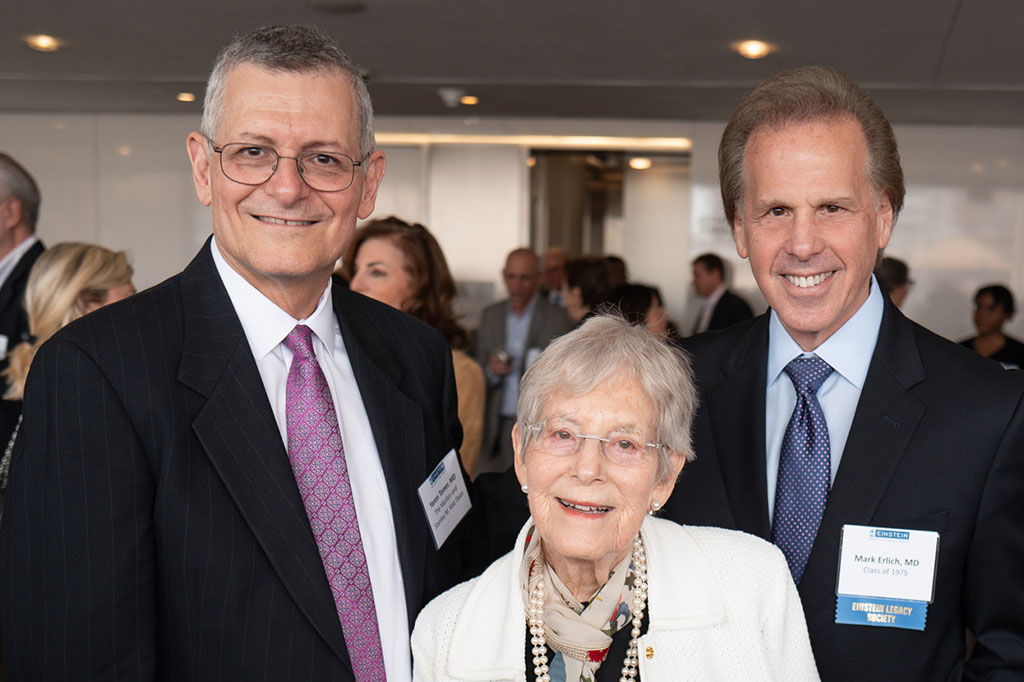
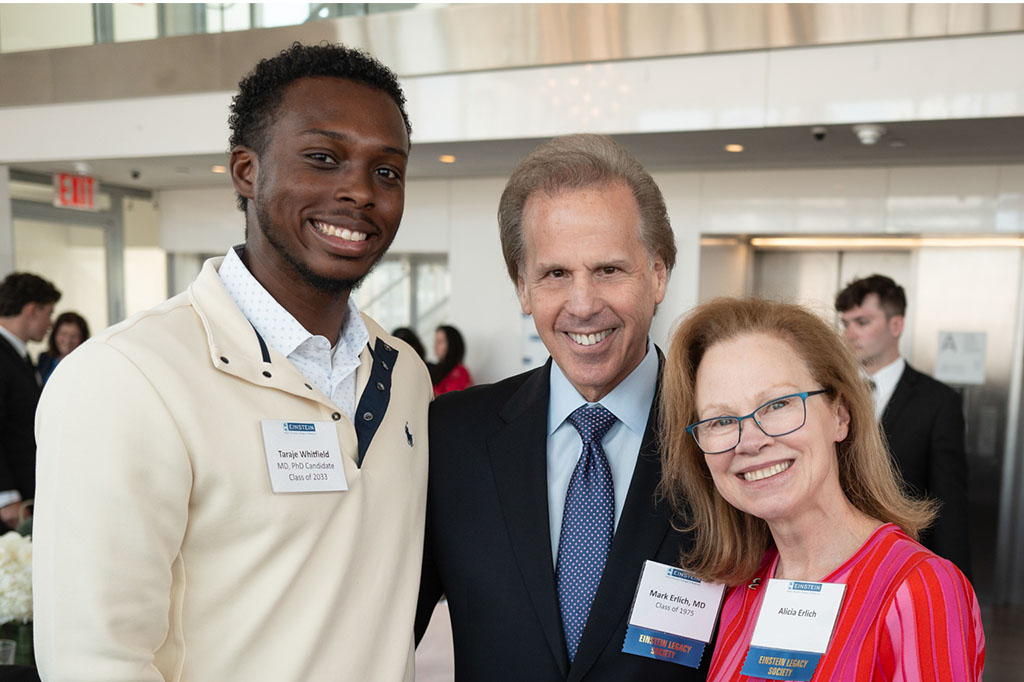
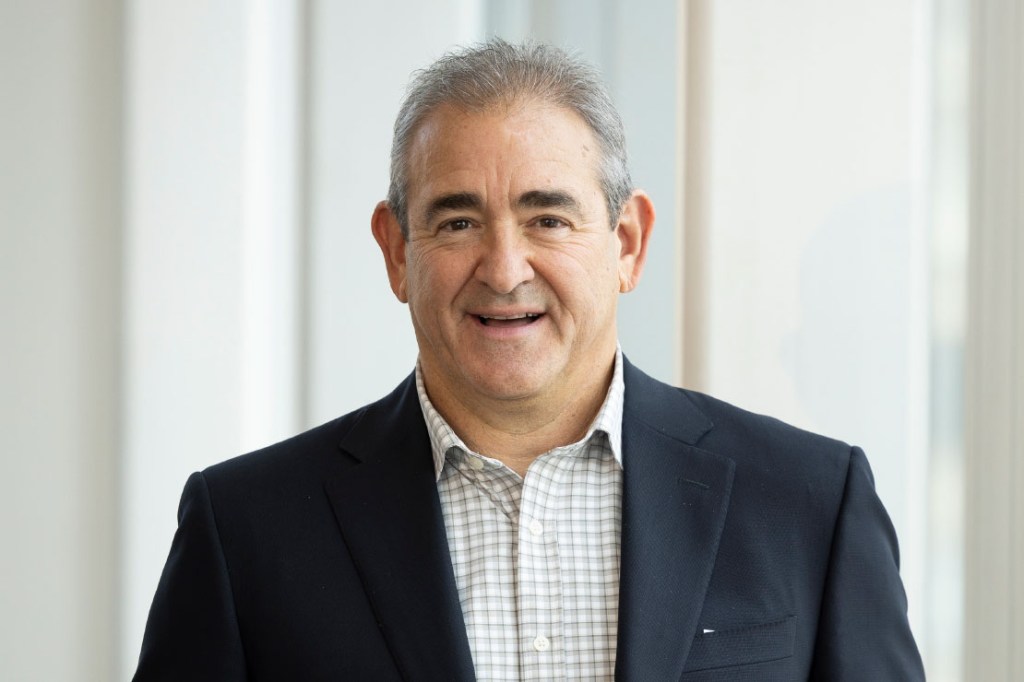
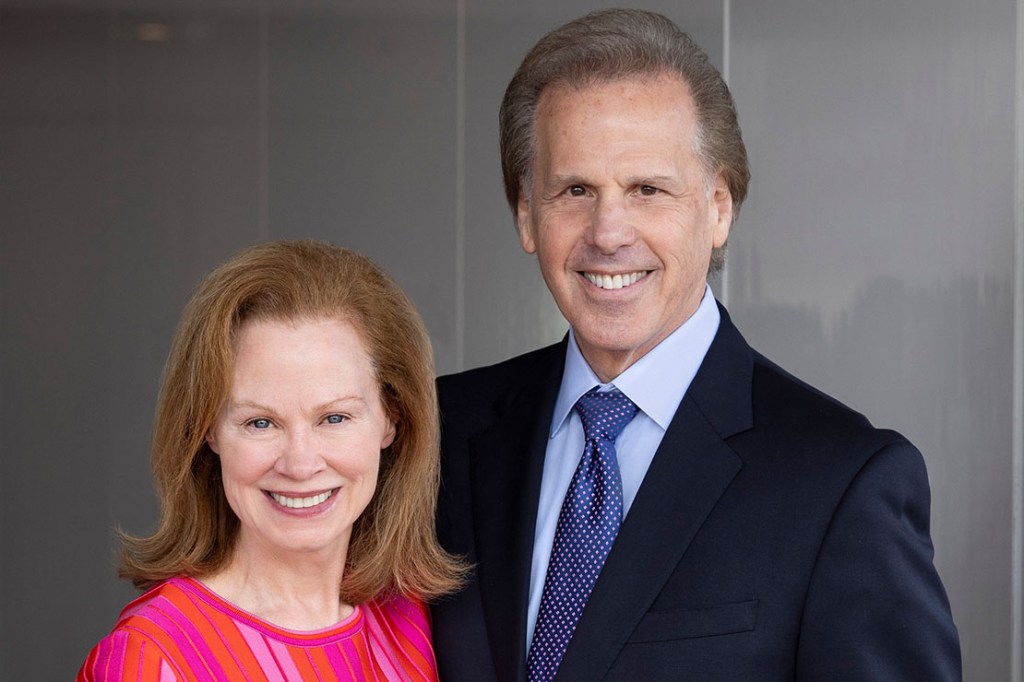
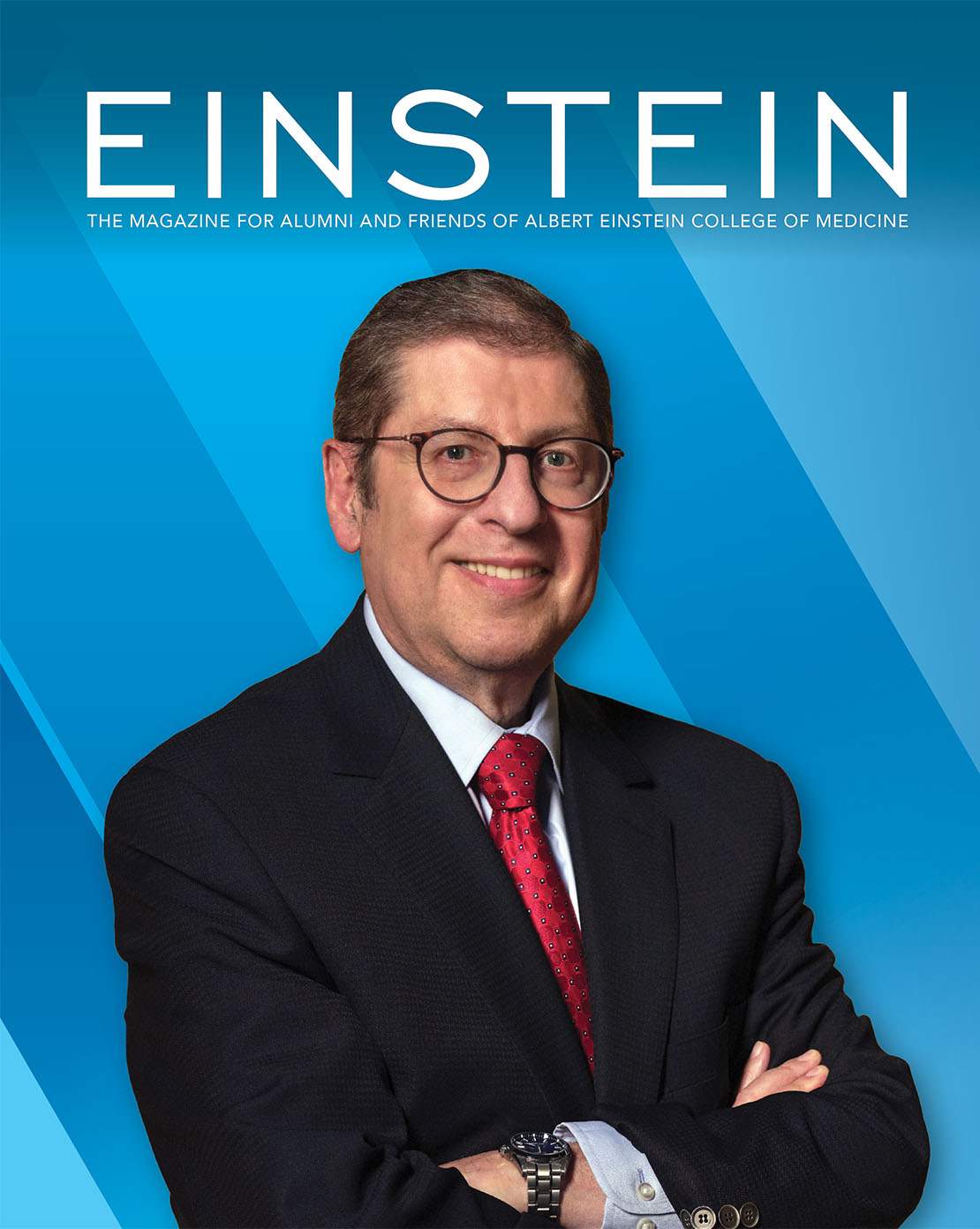
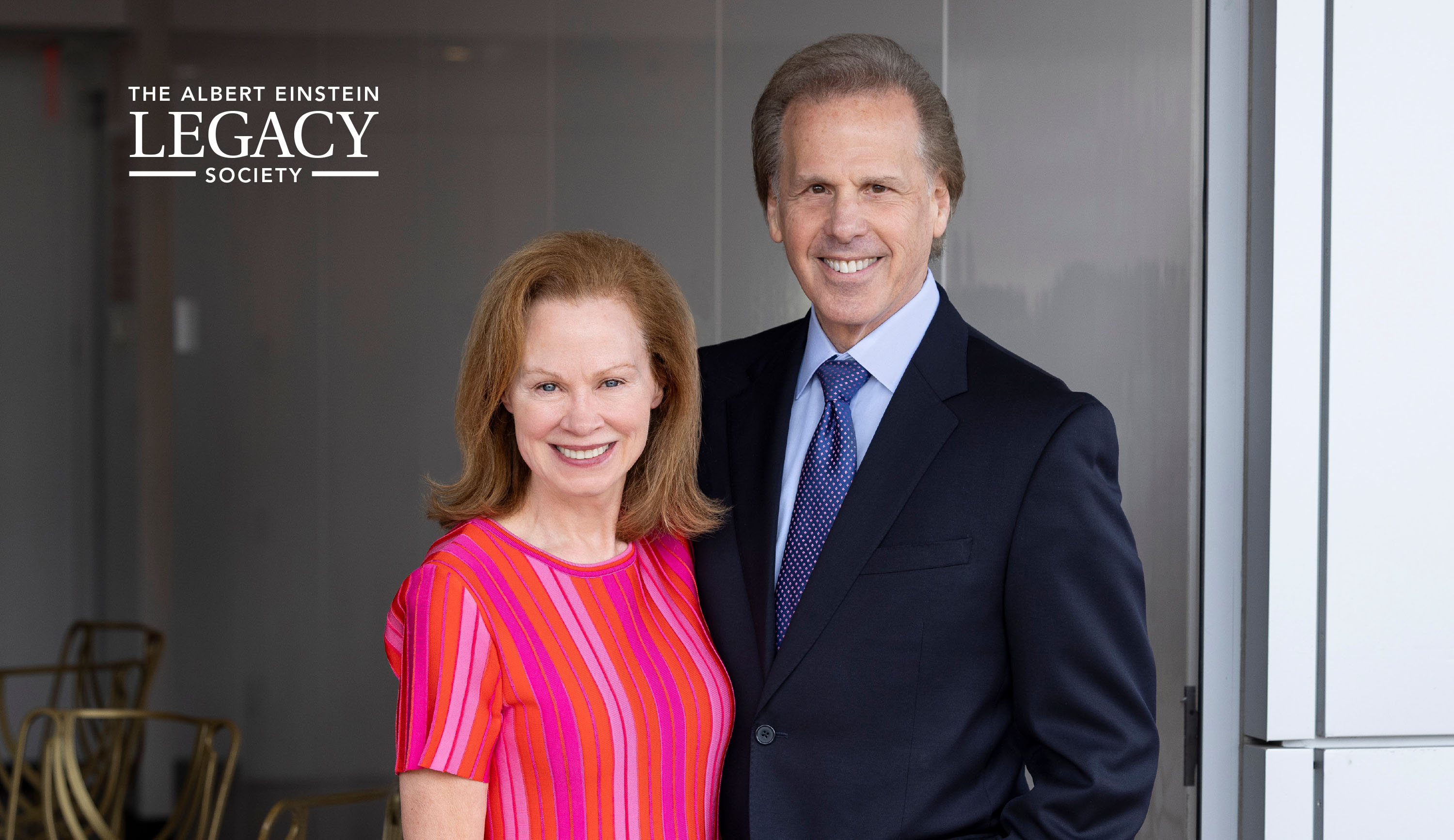
Mark A. Erlich, M.D. ’75, was teaching anatomy at Columbia University and practicing head-and-neck plastic surgery in New York when a hand injury ended his clinical career. He began looking for a second teaching post. “My wife, Alicia, was saying, ‘You have to go back to Einstein. That’s your place,’” he recalls.
Dr. Erlich’s relationship with Einstein had started when he was a biology major at the City College of New York. His biology teacher, Max Hamburgh, Ph.D., “happened to be an anatomy professor at Einstein and became my research mentor,” he says. “When I was 19, he set me up in a lab at Einstein, and I’d leave college frequently to work there.” Upon arriving at Einstein as a first-year medical student, young Mark already felt at home.
Then there was Robert J. Ruben, M.D., chair of otorhinolaryngology—head & neck surgery, whom Dr. Erlich met during an evening anatomy lab makeup session. “We ended up doing 10 labs’ worth of head-and-neck dissection over four hours,” he says. “That day, I decided that would be my career.”
Soon thereafter, Dr. Erlich told Dr. Ruben that he wanted to do an ENT (ear, nose, and throat) elective. “Dr. Ruben said, ‘You know, they don’t do electives before clerkships,’ but I talked him into it,” Dr. Erlich says. “After I graduated, I did a fellowship with him. He had never had a fellow, but he was willing to give me a chance.”
With his wife’s enthusiastic support and his own warm feelings for Einstein, Dr. Erlich interviewed at the College of Medicine for the second time in his life. He was hired as an adjunct instructor in 2014, and has since taught anatomy, the mechanisms of disease, physical diagnosis, and surgical skills. “And I’m loving it,” he admits.
Dr. Erlich has received multiple honors from Einstein for his teaching, including the Harry Eagle Award for Outstanding Pre-Clerkship Teaching in 2025, the Samuel M. Rosen Award for Outstanding Teaching in 2019, and induction into the Leo M. Davidoff Society. “I teach the way I’d want to learn,” he says. “If a fact will help you diagnose or treat a patient, I’ll teach it to you. If another fact is extraneous, I won’t.” His student reviews are overwhelmingly positive, and the feeling is mutual: “The students give me joy,” he says.
When Einstein was building its new anatomy lab on the first floor of the Van Etten Building, Dr. Erlich was the sole surgeon on its design committee. “The former lab in Forchheimer didn’t have great lighting,” he explains, “and if you’re not seeing, you’re not learning.” The brand-new Harry H. Gordon Anatomy Lab and Surgical Skills Center, which opened in August 2025 with the generous support from an anonymous donor, now features state-of-the-art surgical lighting. At dissection stations, for example, a flexible boom allows for lighting to be adjusted for better visibility of intricate anatomical structures.
Having been a student who commuted to college from Queens on the subway, Dr. Erlich is also sensitive to students’ financial concerns. Tuition at Einstein is now free, but students are still responsible for tens of thousands of dollars for room and board, books, supplies, transportation, and more. Dr. and Mrs. Erlich are regular donors, and one year their gift supported student travel to scholarly meetings.
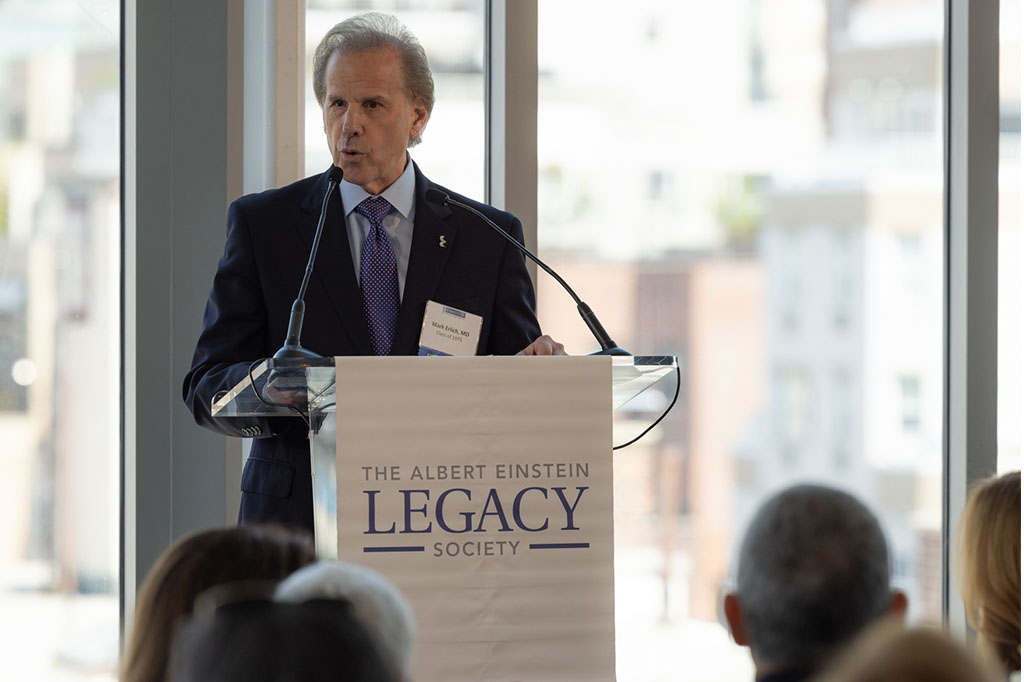
Because they recognize that anatomy is the key foundational course in a student’s medical education, the Erlichs have dedicated funds through their estate plan to go specifically to support additional anatomy training. “Our planned gift through the Albert Einstein Legacy Society is meant to allow students to continue to learn clinical anatomy with the best equipment in the best surroundings,” Dr. Erlich explains. “Fortunately, students at Einstein with a strong interest in this area are still able to pursue additional anatomy training. I actively participate in that, and the students find it of very high value. So our gift is designed to keep that going.”
Establishing a planned gift has not been a hardship for the Erlichs. “We don’t have children, and we’re not giving away anything that we need now,” Dr. Erlich says. And setting it up was easy: “You find the lawyer who did your will, you say, ‘Here’s what I want to do,’ and they change it.”
Dr. and Mrs. Erlich know they’ve made the right move with their philanthropy. “You’re giving to a place that will palpably benefit from your donation,” he says.
To speak to someone about creating a plan that best meets your philanthropic goals, visit Planned Giving to explore your options, or contact Dorea Ferris, senior director of planned giving, at 718.430.3594 or dorea.ferris@einsteinmed.edu.