“We cannot solve our problems using the same thinking we used when we created them.” —Albert Einstein
One Einstein student had worked for an electric-car company. Another worked at a drug company on COVID-19 therapies. A third had designed diagnostic medical tools during her bachelor’s degree program in bioengineering.
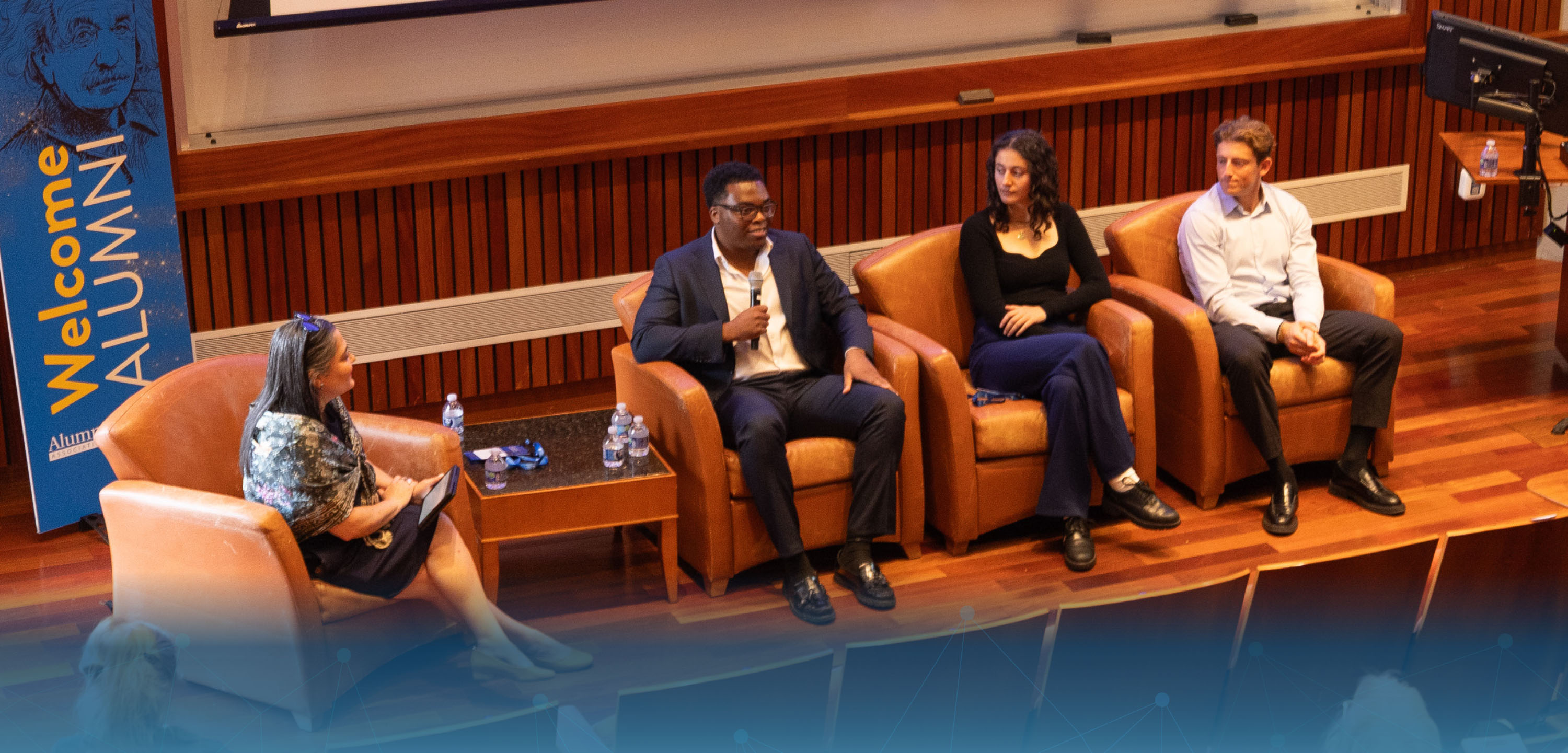
When Einstein students Isaac Faith, Noah Jacobs, and Zoe Goldberger found each other in the fall of 2024, they launched an enterprise dedicated to innovation, entrepreneurship, and interdisciplinary collaboration.
In less than two years, that program, called the Einstein Innovation Group (EIG), has grown to include nearly three dozen medical, Ph.D., and M.D./Ph.D. student members, guided by several faculty advisors. A welcome addition to the Einstein innovation ecosystem, EIG reflects a new student approach to healthcare delivery and patient outcomes.
I want to help design and implement better ways of delivering care so that solutions actually reach patients.
—Isaac Faith, rising fourth-year medical student
“Innovation in medicine involves much more than just having the right idea,” explains Mr. Faith, who worked at Tesla and is a rising fourth-year medical student. “It’s about execution, infrastructure, and the ability to translate that idea into something that reliably reaches patients. At Tesla ideas were not just discussed; they evolved—refined and improved through testing before finally being deployed. You ended up feeling confident that the idea you’d been working on had been transformed into something real and impactful.”
The students behind EIG already have much to show for their efforts. They have created a comprehensive website, published a monthly digital newsletter, sponsored a regional innovation case competition, established a summer fellowship, and produced a monthly seminar series about biotechnology. And thanks largely to EIG’s influence, Einstein this fall will offer its first course elective on healthcare innovation, open to both medical and graduate students.
“EIG is strengthening the spirit of discovery and entrepreneurship across the Einstein campus and helping prepare the next generation of leaders in biomedical innovation,” says Yoon Kang, M.D., the vice dean for education, a professor of medicine, and EIG’s executive sponsor. “What our students have already accomplished is remarkable.”
Mr. Jacobs, a rising third-year M.D./Ph.D. student, worked as an intern at Gilead Sciences during the pandemic. He also earned a bachelor’s degree in neuroscience and a master’s in immunology before coming to Einstein.
“My main reason for wanting to attend medical school and become a physician-scientist is to use basic science to identify problems, to use biotechnology to address those problems, and, ultimately, to scale a solution that will benefit patients and their families,” he says.
Ms. Goldberger, a rising third-year medical student, wanted to better understand the bioengineering problems she had tackled as an undergraduate.
“My favorite part of engineering was being encouraged to look at problems, break them down, and then create solutions,” she says. “What drew me to medical school was realizing that I needed to see the healthcare system from the inside before I could come up with solutions for improving it.”
What drew me to medical school was realizing that I needed to see the healthcare system from the inside before I could come up with solutions for improving it.
– Zoe Goldberger, rising third-year medical student
Mr. Faith says his interest in medicine was shaped by problems he faced trying to navigate the U.S. healthcare system, which lacked the universal healthcare offered by his native England. “I saw how difficult it could be to access care here, how confusing the system felt, and how much responsibility falls on patients to advocate for themselves,” he says.
His work in business development at Tesla taught him that inefficiencies in tech are identified and addressed quickly. “But in healthcare they persist,” he says, “and patients absorb the consequences. I want to help design and implement better ways of delivering care so that solutions actually reach patients.”
All three of EIG’s student founders emphasize the importance of working with interdisciplinary teams to achieve their objectives. “We want to understand the healthcare system through as many lenses and from as many perspectives as possible,” Mr. Jacobs says. “We realize that learning from the medical curriculum or the Ph.D. curriculum gives you only a piece of the whole puzzle. The same drive that led me to want to do an M.D and a Ph.D. is also what’s leading me to want to learn about business and economics, the social determinants of health, technology, artificial intelligence, and all the various domains that come together to create what is U.S. healthcare in 2026.”
The ECHO Free Clinic was started in 1999 by a group of students and now is woven into the DNA of Einstein. We are working hard to make sure that EIG is like that—something that lasts.
– Noah Jacobs, rising third-year M.D./Ph.D. student
EIG has four key components: communication, education, applied learning, and professional development. All four are led by Einstein students.
“We wanted to create something sustainable, so that the students who come after us can continue to innovate and add more layers so that EIG continues to grow,” Ms. Goldberger says. Adds Mr. Jacobs: “The ECHO Free Clinic was started in 1999 by a group of students and now is woven into the DNA of Einstein. We are working hard to make sure that EIG is like that—something that lasts.”
Here, Einstein students fill us in on what they have accomplished so far and what they have planned.
The EIG communication team is led by Jacob Kudria, an M.D./Ph.D. student. It produces a digital newsletter intended as the go-to place for students for information on innovation at Einstein, such as Einstein’s Biodesign Training Program events and Einstein’s office of biotechnology and business development seminars. The newsletter also alerts readers to similar seminars and workshops around New York City, offers information on career development, and recommends books and podcasts.
A recent issue of the newsletter ran an article about medical student Ashu Yaligar, EIG’s inaugural summer fellow (see “Professional Development,” below). Another story described a hands-on science workshop series for Bronx high school students launched by an Einstein Ph.D. candidate and an Einstein M.D./Ph.D. student.
A new eight-week fall elective, Fundamentals of Innovation and Applications in Medicine, is open to students interested in healthcare innovation, design, or entrepreneurship and was the brainchild of Mr. Jacobs, Ms. Goldberger, and Michael LaScola, an M.D./Ph.D. student.
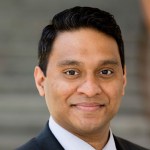
Since the course is open to both medical students and Ph.D. students, we are excited to get a variety of perspectives from students who will offer different solutions to the healthcare challenges presented.
—Selvin Soby, Pharm.D.
“It is a team-based approach to training,” says the course director, Selvin Soby, Pharm.D., senior director of pharmacy innovation and population health at Montefiore. “And since the course is open to both medical students and Ph.D. students, we are excited to get a variety of perspectives from students who will offer different solutions to the healthcare challenges presented.” Dr. Soby is also a research assistant professor of genetics at Einstein and serves as an EIG advisor.
In the fall of 2025, Mr. Jacobs and Mr. Yaligar launched a series of innovation seminars and workshops open to Einstein students as well as to postdocs, faculty, and residents. Titled “The Business of Healthcare,” the talks covered topics such as insurance, drug development, and venture capital, with many of the sessions hosted by Einstein alumni.
One October seminar, for example, featured Einstein alumni Sabriya Stukes, Ph.D. ’14, chief scientific officer at IndieBio, and Perry Nisen, M.D., Ph.D. ’82, chief executive officer of Quanta Therapeutics. You can listen to the six fall 2025 presentations here.
The recent 2026 winter biotech seminar series featured five presentations on different stages of clinical trials. Several were given by Einstein professors who have also founded biotechnology start-ups. The two series have drawn an audience of more than 400.
“There’s no better way to get a sense of what lies ahead than to actually connect with the people operating in those worlds,” Mr. Jacobs says.
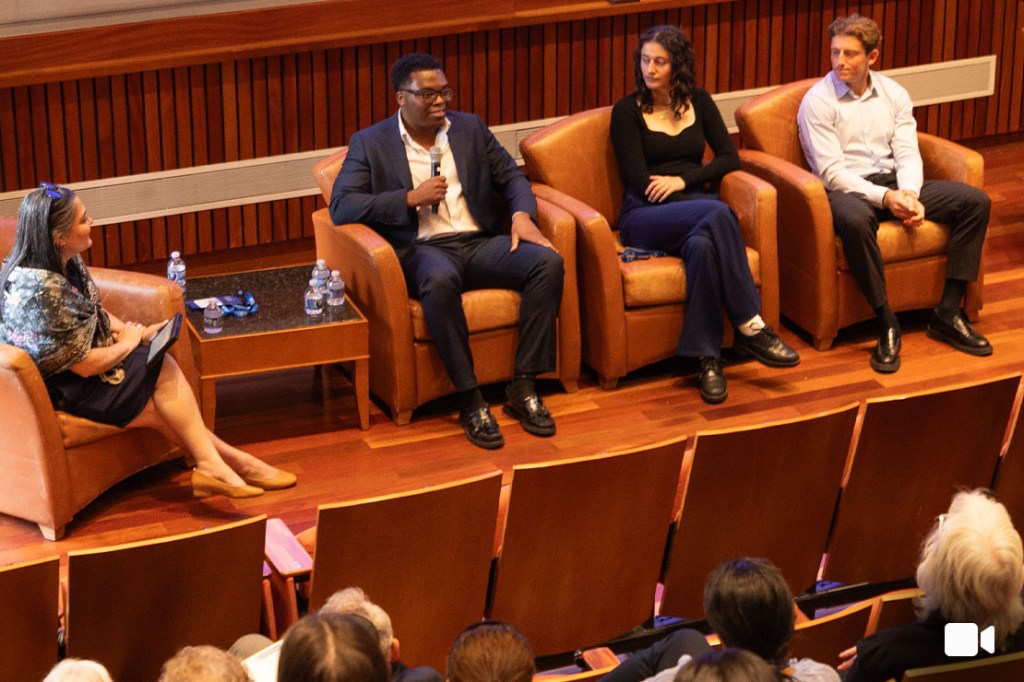
For hands-on experiences in biotechnology and healthcare innovation, Ms. Goldberger and medical students Shivani Guha, Juhi Mehta, and Elisheva Minsky helped launch one of this initiative’s first events—a case competition that drew nearly 50 participants to Einstein on a Sunday morning in March 2026. Called “Reimagining Innovative Social Entrepreneurship (RISE),” it brought to the Michael F. Price Center/Harold and Muriel Block Research Pavilion seven teams of students from Einstein, New York Medical College, and Einstein’s pathway programs.

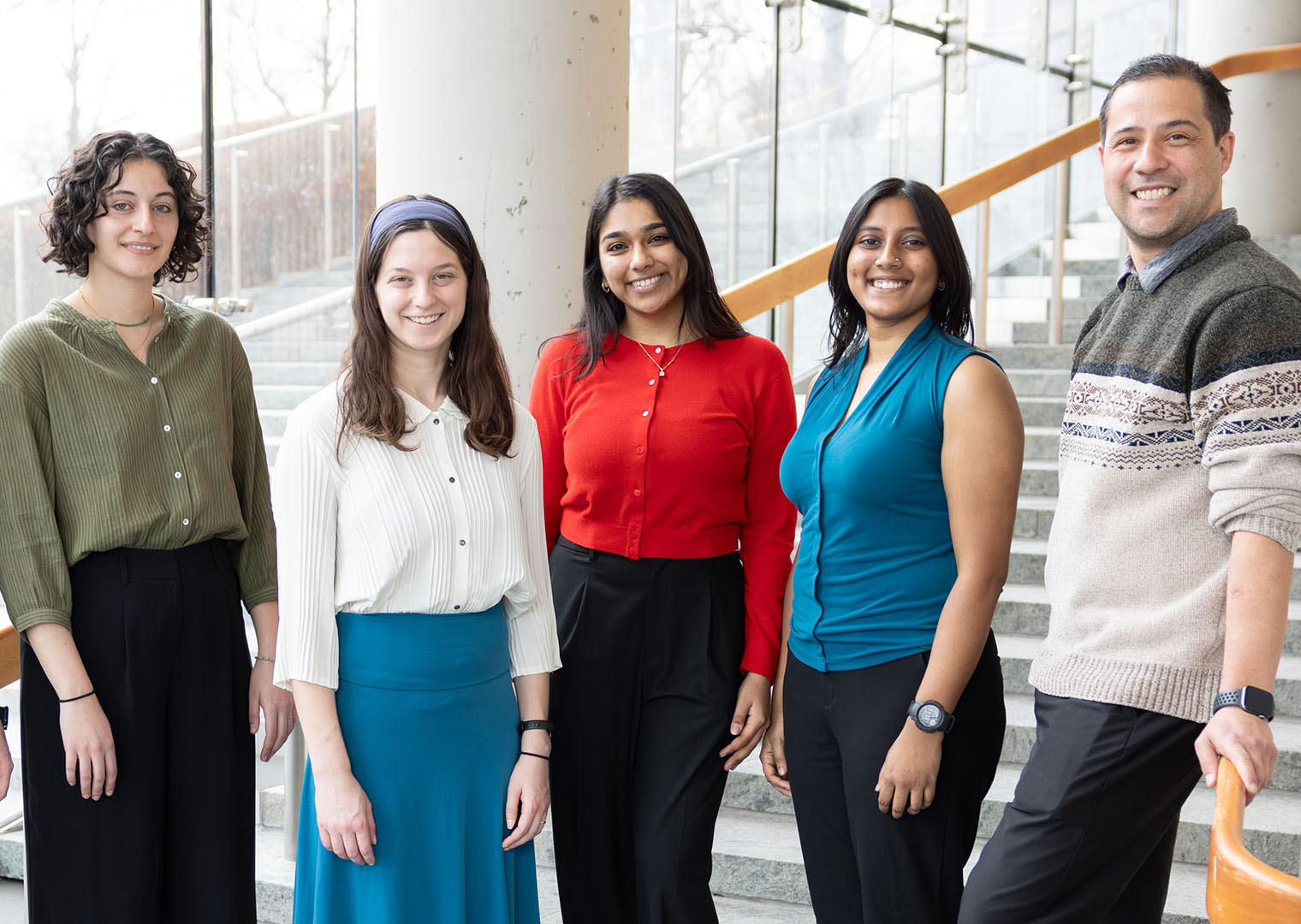
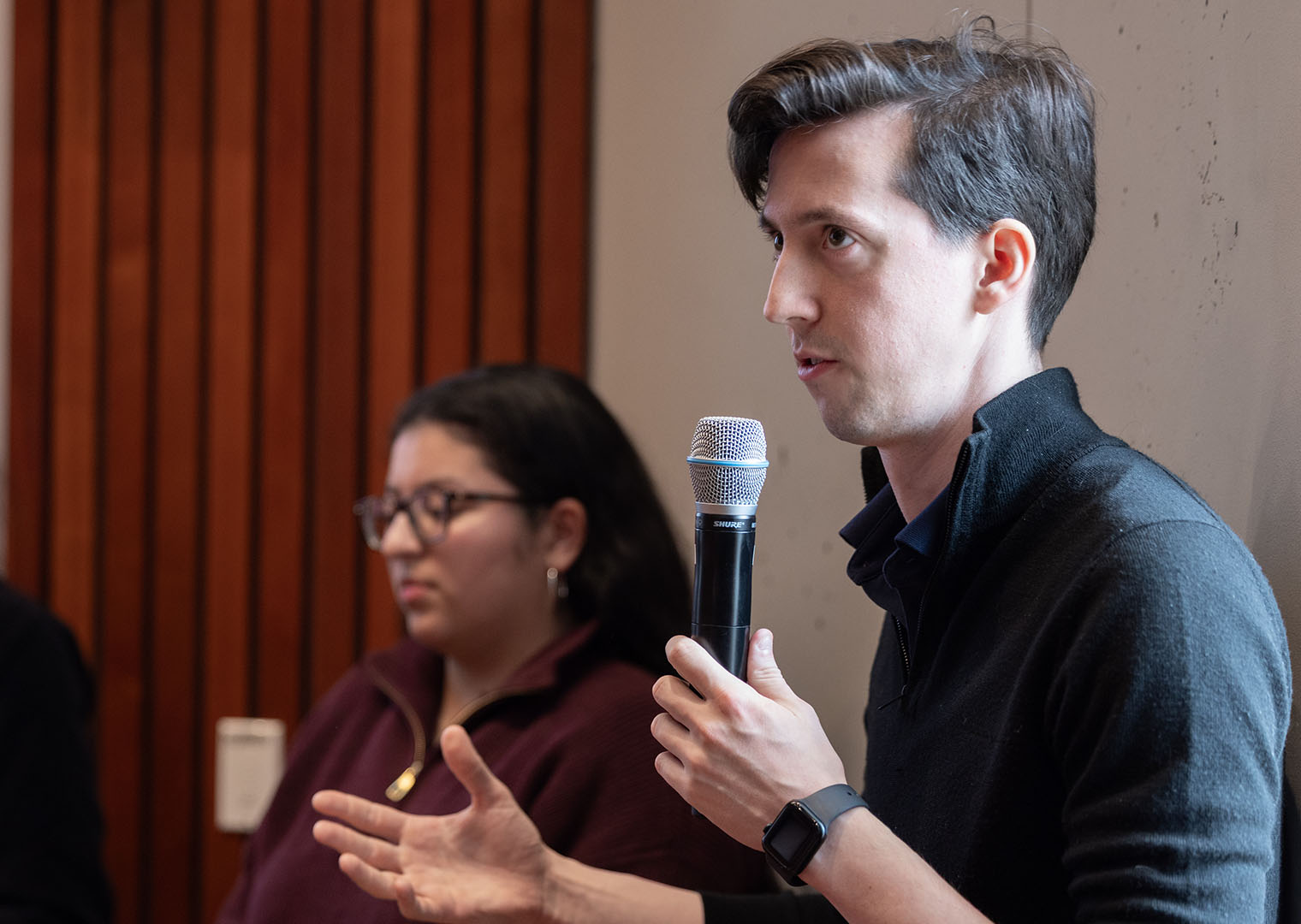
“We modeled it on the Emory Morningside Global Health Case Competition,” says Ms. Goldberger, who was a member of the Einstein team that competed at Emory in 2025.
Each of the seven teams, made up of medical and graduate students, was tasked with addressing housing, one of the Bronx’s most pressing public health issues. Students spent 10 to 20 hours developing proposals grounded in Bronx housing data and policies. They then had 12 minutes to pitch their solutions to a panel of judges consisting of medical professionals, architects, and members of Bronx community organizations.
Yaron Tomer, M.D., the Marilyn and Stanley M. Katz Dean at Einstein, told the audience that the RISE competition “is a powerful example of the Einstein Innovation Group’s vision in action. Collaboration across institutions and stages of training is exactly how innovative solutions emerge.”
Alexandre Carvalho, M.D., M.P.H., an assistant professor of medicine at Einstein who is the RISE program’s faculty advisor, noted that the students “asked hard questions about need, equity, feasibility, and impact. Our goal was to inspire the next generation of changemakers.”
In addition to having participated in the RISE competition, graduate student Bita Adel-Zadeh, an EIG team leader, is working with Einstein’s office of biotechnology and business development to offer an eight-week incubator program. Scheduled for launch this fall, it is being designed to provide Einstein students with biotech start-up experience using intellectual property developed by Einstein researchers.
This part of EIG, led by Mr. Faith and medical student Aaron Brewer, connects Einstein students with alumni and mentors working in the area of healthcare innovation.
“This is something I care deeply about, because mentorship has been one of the most important drivers in my own path,” says Mr. Faith, who spent this past academic year as a Sarnoff Cardiovascular Research Fellow at Massachusetts General Hospital. “It is very clear to me that I would not be where I am without the guidance of mentors like Raja Flores [M.D. ’92, Einstein Trustee], Brendon Stiles [M.D., Montefiore Einstein], and Asishana Osho [M.D., Ph.D., Harvard]. What stood out wasn’t just their advice, but how they approach problems in medicine: not just treating patients, but building programs, advancing research, and translating ideas into real-world healthcare tools. That’s the kind of exposure I want to make more accessible to other students.”
Mr. Faith came up with the idea of creating an innovation fellowship in an industrial setting—one that would show Einstein students how healthcare tools, companies, and systems are built. In 2025, it was piloted as a summer opportunity in collaboration with Dr. Kang and Sunit Jariwala, M.D., faculty advisor for the EIG fellowship. Dr. Jariwala is also a professor of medicine at Einstein, the director of clinical and research innovation in the department of medicine, and the medical director of digital transformation for the Montefiore Health System.
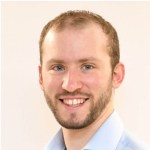
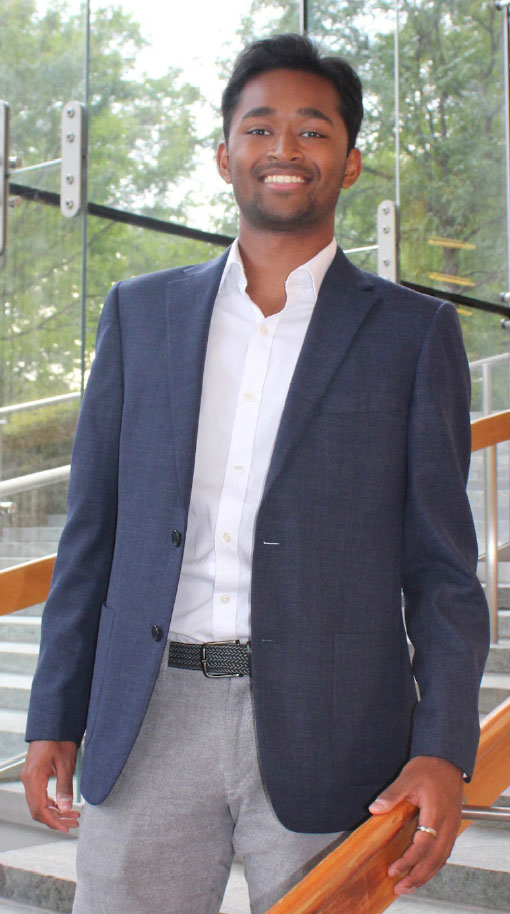 Ashu Yaligar, EIG’s inaugural summer fellow
Einstein alumnus Yair Saperstein, M.D. ’16, founder and CEO of the digital health start-up AvoMD, was approached to serve as the inaugural organizational partner for this fellowship. Could his New York City–based company offer an Einstein student hands-on experience over the summer? Dr. Saperstein was more than happy to help, and Einstein medical student Ashu Yaligar became EIG’s first summer fellow.
From day one, he wasn’t just observing. He was on calls with clinicians, translating their pain points into product insights and challenging us to think harder about the problems we were solving.
—Yair Saperstein, M.D. ’16
“From day one, he wasn’t just observing,” Dr. Saperstein says. “He was on calls with clinicians, translating their pain points into product insights and challenging us to think harder about the problems we were solving. Hosting students and fellows is real work for us, but it’s the kind of investment that pays back—both for the company and for a field that desperately needs more physician-innovators who understand both medicine and technology.”
Mr. Yaligar looks back on the experience as invaluable to his medical education. “I got to learn about the tech used at AvoMD because the director of product offered to sit down with me for a couple of hours and explain the AI models in depth,” he recalls. “What was truly inspiring was that after the meeting, that director left to work a hospitalist shift.”
The EIG team plans to work with Einstein’s alumni network to create many more innovation opportunities for Einstein students. “Our goal,” says Mr. Faith, “is to train a generation of physicians and scientists who do not just work within existing systems but are equipped to question them, redesign them, and build better ones that can be delivered to patients more effectively and at scale.”